Weather seal
Light, sand or water creeping under the door?
- Bottom seal in the retainer
- Side and top stops
- Threshold seal on the slab
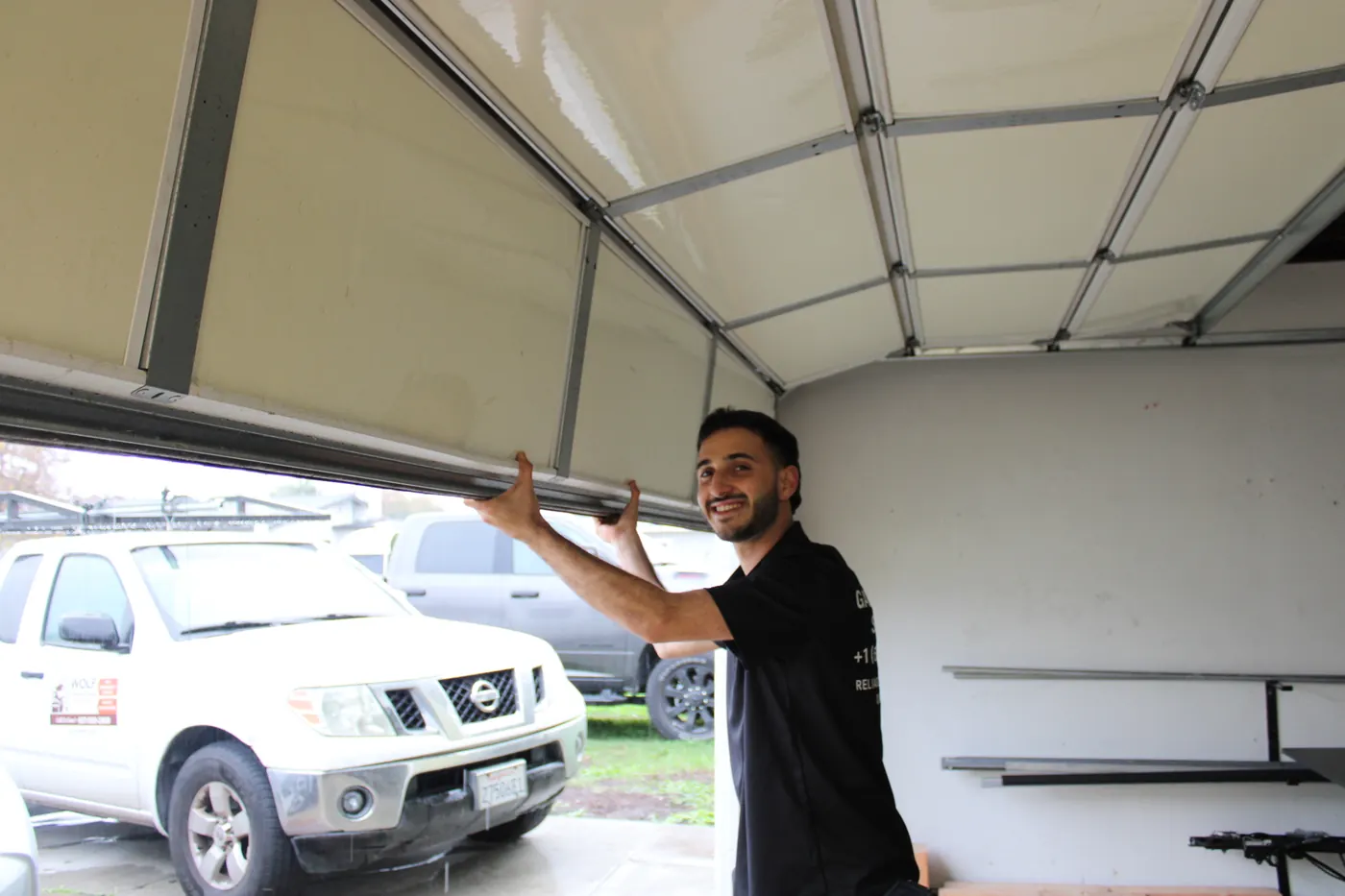
Garage door weather seal replacement closes the gaps that let beach sand, wind-driven rain and crawling pests into your garage. Rubber and vinyl dry out, crack and flatten, and once they do you'll see daylight along the floor. Wolf fits new seals for homes in Huntington Beach and around Orange County.
Most jobs start with garage door bottom seal replacement. The rubber that touches the concrete slides into an aluminum or steel retainer, and we match the profile your door uses. Along the sides and top, vinyl stops press against the face of the door. A seal job pairs well with a maintenance visit, and if the bottom section itself has rusted, look at panel replacement.
Daylight under the door?
Call any hour. We'll ask what you're seeing and bring a matching seal.
Seals we replace
Each gap around the door gets its own type of seal.
Bottom seal
The flexible strip in the retainer along the bottom edge. It's the part that wears out first.
Retainer repair
When the channel is bent or corroded, the new rubber won't hold. We replace the retainer if needed.
Side and top stops
Vinyl strips on the jambs and header that press against the closed door to block drafts.
Threshold seal
A raised rubber strip glued to the slab. Useful where the floor is uneven or water runs toward the door.
Bottom seal styles
T-style
Two beads slide into a double-channel retainer, a common profile on newer steel doors.
Bulb
A rounded tube that squashes against the floor and fills small dips in the concrete.
J-type
Hooks into a retainer with a J-shaped edge. Usually found on older doors.
Signs your seals are worn
Stand inside with the door shut and look for:
- Daylight at the floor or sidesAny visible light means air, sand and bugs can get through.
- Sand drifting in after windy daysClose to the beach, a tired bottom seal lets grit blow under the door.
- Puddles after rainWater reaching the garage floor points to a gap at the bottom or threshold.
- Cracked, stiff or flattened rubberSun and salt air break down rubber until it no longer seals.
- Insects, rodents or leaves insidePests find the same gaps air does.
Safety first. Don't wedge objects under the door to block gaps. A door that closes on something it can't sense may not reverse, and the opener can strain or damage the bottom section.
Why have Wolf reseal the door
Matched to your door
We bring the profile your retainer takes.
Free safety inspection
Comes with any completed repair or service.
Free estimate
You get the price before we start.
Open 24/7
Call whenever it suits you.