Tune-up
The squeak is dry metal. A tune-up is where the oil actually goes.
- Garage-door lubricant, not a household spray
- Balance checked by hand
- Coast rust versus inland dust
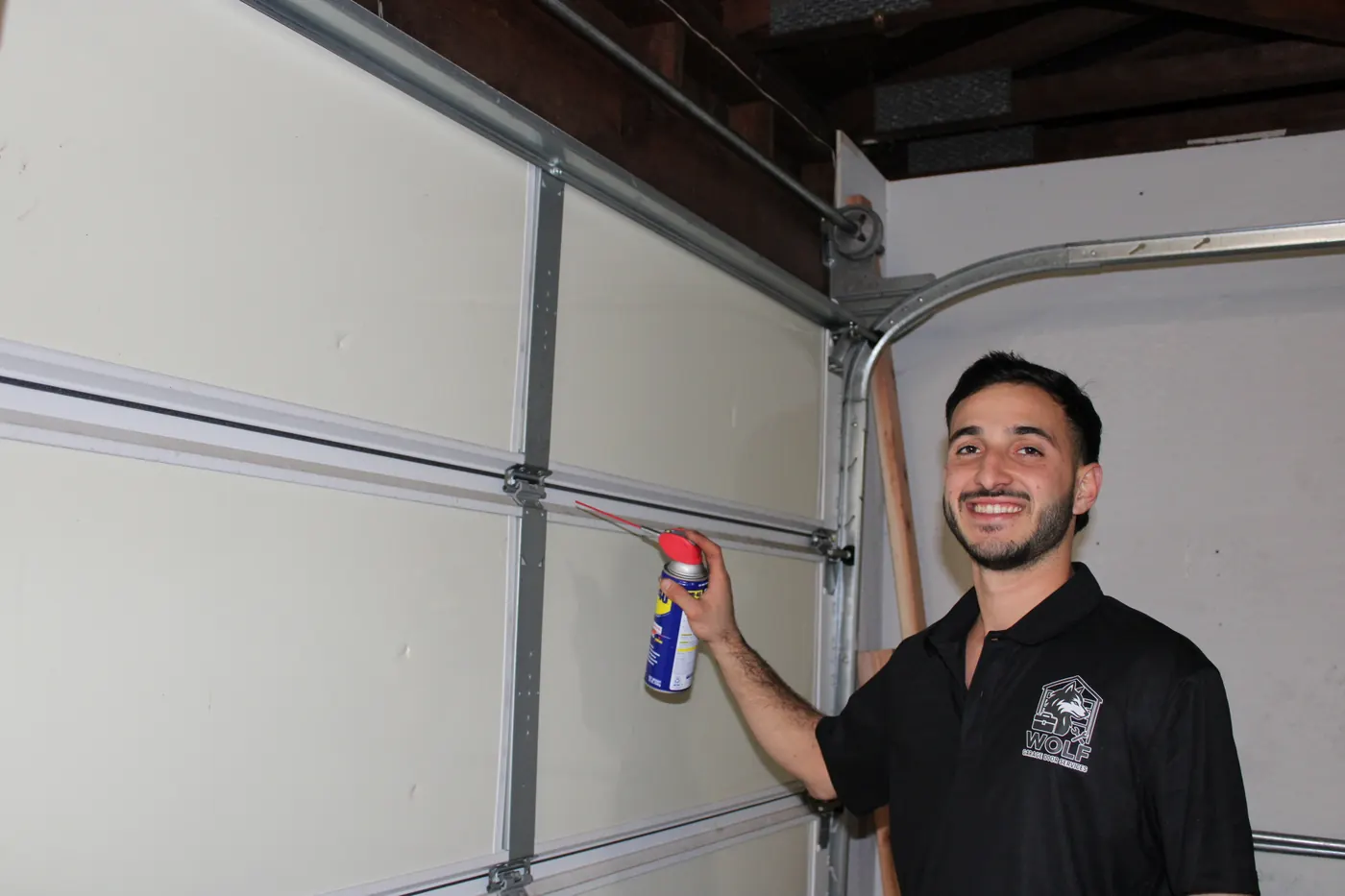
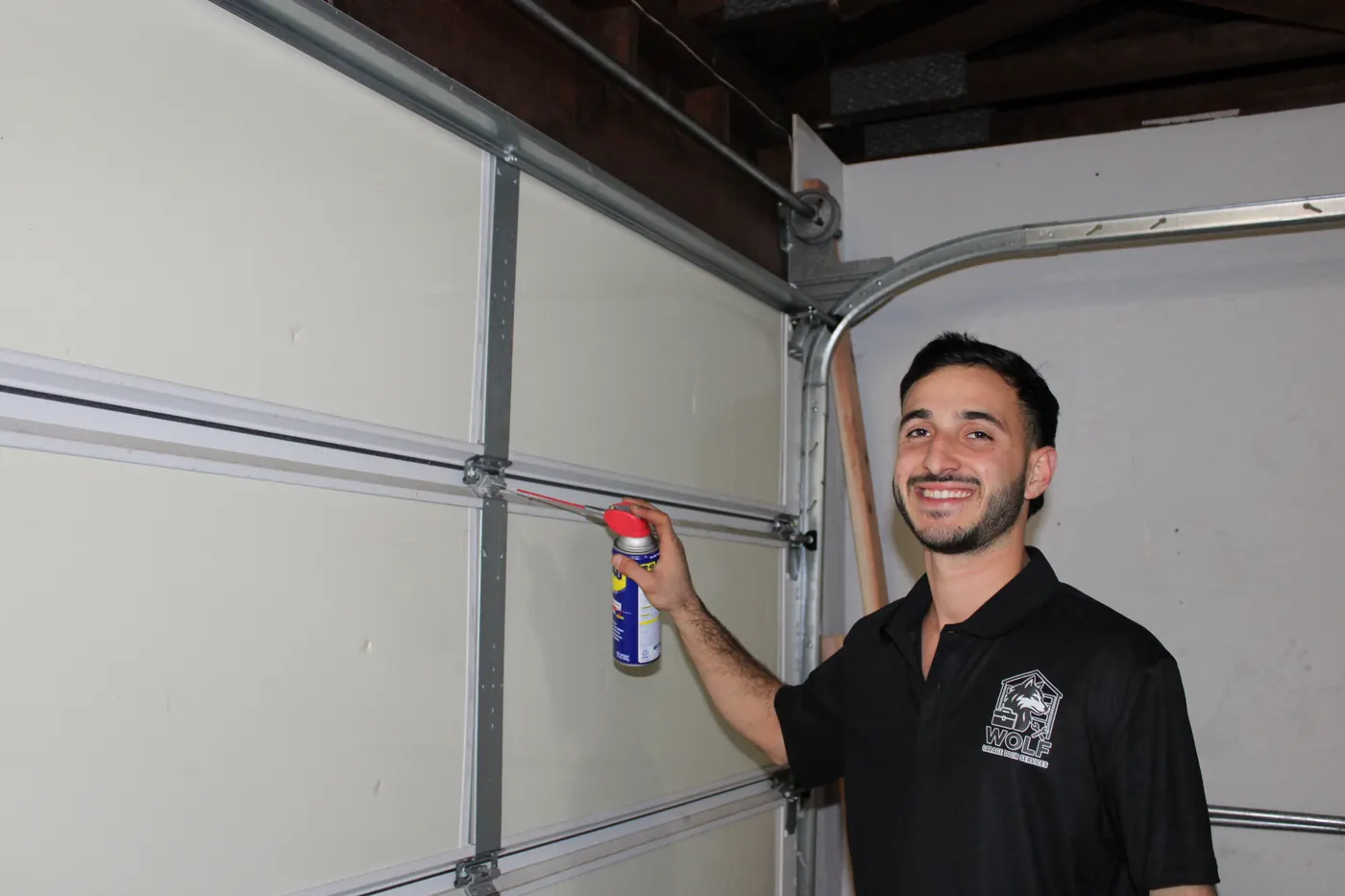
A garage door tune-up and lubrication is the visit for a door that still works and has started talking. Dry roller stems, dry hinge knuckles, and a spring coil with no film on it are what turn a quiet door into a scrape. The fix is a lubricant made for garage doors, on the parts that move, and a look at whether the door is still balanced.
This is narrower than a full maintenance visit, which also tightens hardware and runs the opener's safety tests. Book the tune-up when noise and stiffness are the complaint. Book maintenance when you want the whole once-over, including the auto-reverse. Worn rollers and cracked hinges get replaced when oil will not quiet them. Salt air versus inland dust changes what we wipe off first. Cities are on the cities we cover page.
Door squeaking every time it moves?
A tune-up puts lubricant on the moving parts and checks the balance.
Where the lubricant goes
Not on the track. The track is where the roller rolls, and oil there collects grit.
Roller stems and bearings
The stem where it passes through the hinge, and the bearing in the wheel if it is not a sealed nylon roller. Steel rollers with open bearings drink oil and still wear out.
Hinge knuckles
The pivot between sections. A dry knuckle clicks once per cycle. A cracked hinge is a replacement, not a squirt of oil.
Spring coils
A light film on torsion or extension springs slows rust, which matters within a few miles of the beach. We do not soak the floor.
Bearing plates, not the track
The plates at the ends of the torsion shaft get a drop. The vertical track stays dry so sand does not turn into paste.
Coast door or inland door
Near the water
Salt film on the springs and the bottom fixtures comes off before any lubricant goes on. Oil over salt just seals the rust in.
Inland valleys
Dust in the hinges and heat-dried rollers are the pattern. The same points get lubricated, after the grit is wiped out of the knuckles.
A door that was sprayed with the wrong can
Household penetrating oil and silicone sprays from the kitchen drawer gum up or flash off. We clean that off and use a garage-door lubricant.
Sounds that mean a tune-up, not a new part
Call for lubrication when:
- A squeak once per foot of travelUsually a dry roller stem or a hinge knuckle, not a dying motor.
- The door shudders at the same spotA dry or flat-spotted roller. Oil first. If the wheel is egg-shaped, it gets replaced.
- Springs look dusty and dullBare coils near the coast start rusting. A film after a wipe is the prevention.
- It got loud after you sprayed somethingThe wrong product attracts grit. A tune-up includes cleaning that off.
- The door still moves, it just complainsIf it has stopped moving, or a cable is loose, that is a repair, not a lube visit.
Safety first. Do not spray lubricant onto a hot opener motor or onto the photo eyes. And do not oil the springs and then try to adjust their tension. Tension is not a tune-up step you do yourself.
Why have Wolf do the tune-up
The right product
Garage-door lubricant on moving metal. Nothing on the track face.
Balance in the same visit
A dry door and a weak spring feel similar. We separate them by hand.
Steps up to a repair cleanly
If a roller or hinge is actually done, you hear that before we swap it.
Book it any day
The line is answered overnight, same as a breakdown.